Reliavle vibration machinery factory committed to good customer experience - GUOFENG
Language
Reliavle vibration machinery factory committed to good customer experience - GUOFENG
A vibrating mill is a type of grinding equipment that uses mechanical vibration to grind materials. During operation, grinding media move inside the grinding chamber and repeatedly impact and rub against the material, helping reduce its particle size.
Vibrating mills are used in different material processing applications where fine grinding or particle size reduction is required. Understanding their structure, working principle, and key selection factors can help users determine whether this type of equipment is suitable for their processing needs.
Main Components of a Vibrating Mill
A vibrating mill consists of several main components. Each component plays a role in the grinding process, from generating vibration to supporting the grinding chamber and grinding media.
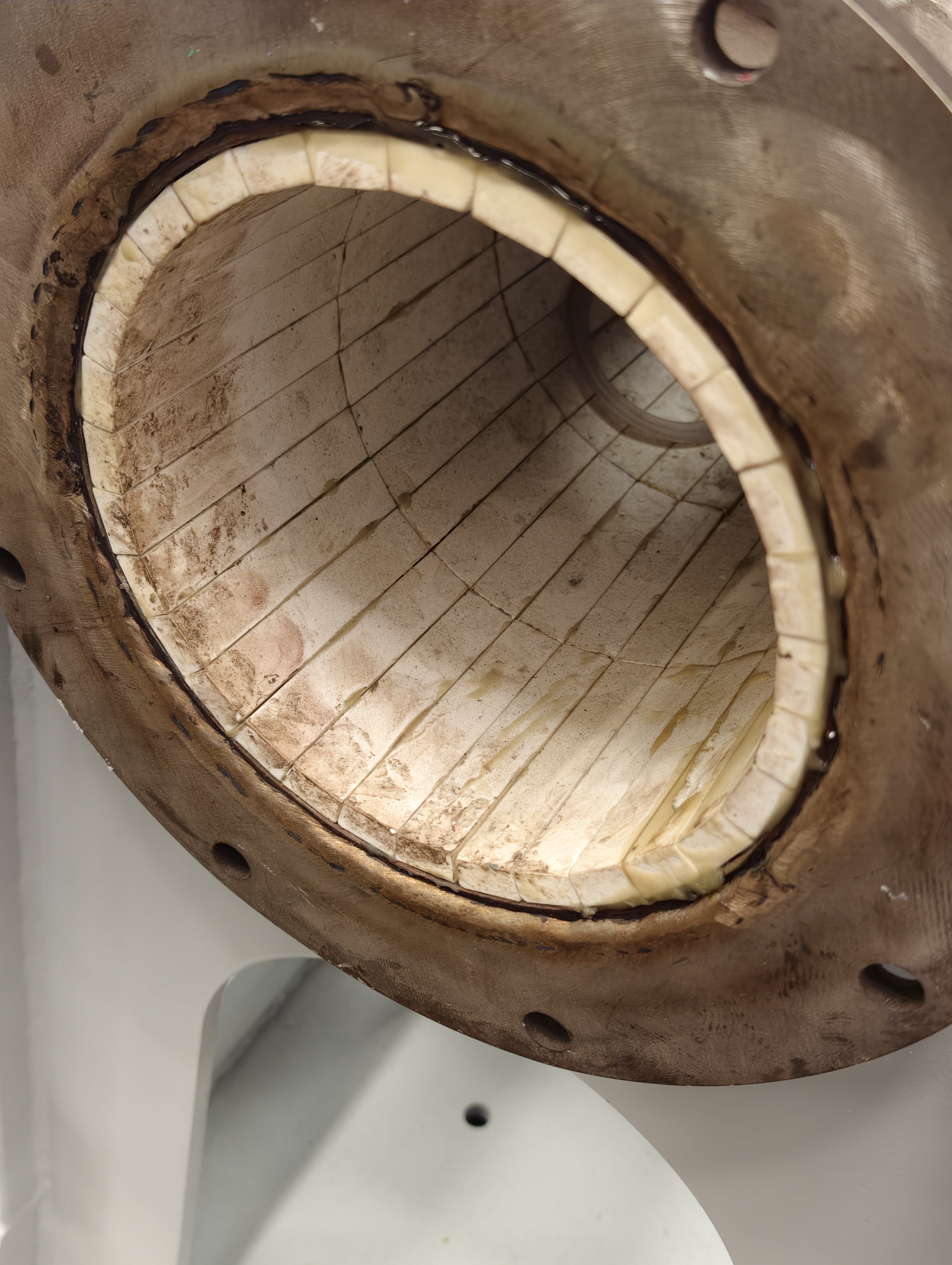
Grinding Chamber
The grinding chamber is the space where the material and grinding media are placed.
Its structure and lining can affect the grinding process and the compatibility of the
equipment with different materials.
Vibration Motor
The vibration motor generates the mechanical vibration required for the grinding process. This vibration drives the grinding media to move inside the grinding chamber, allowing them to impact and rub against the material.
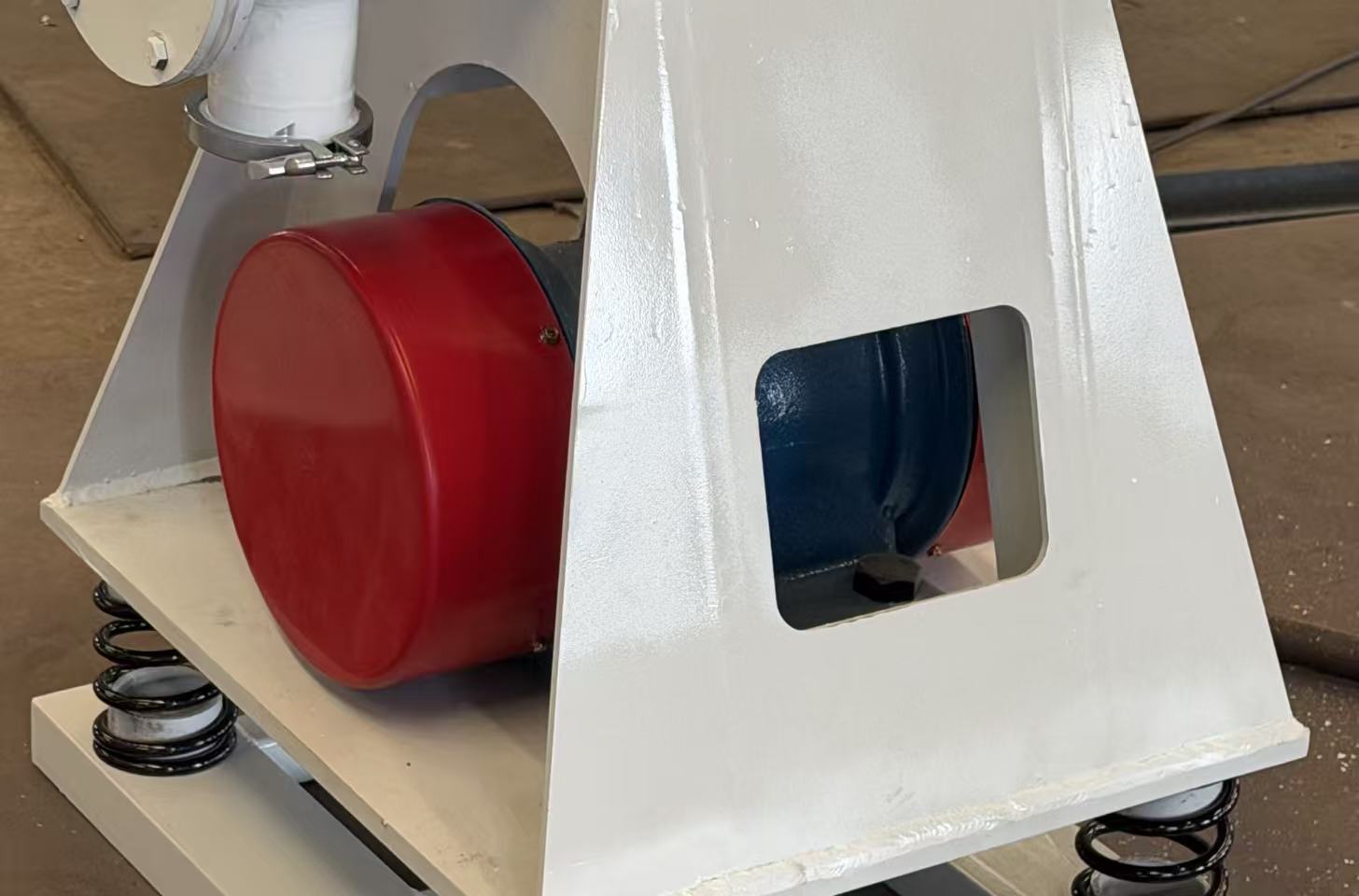
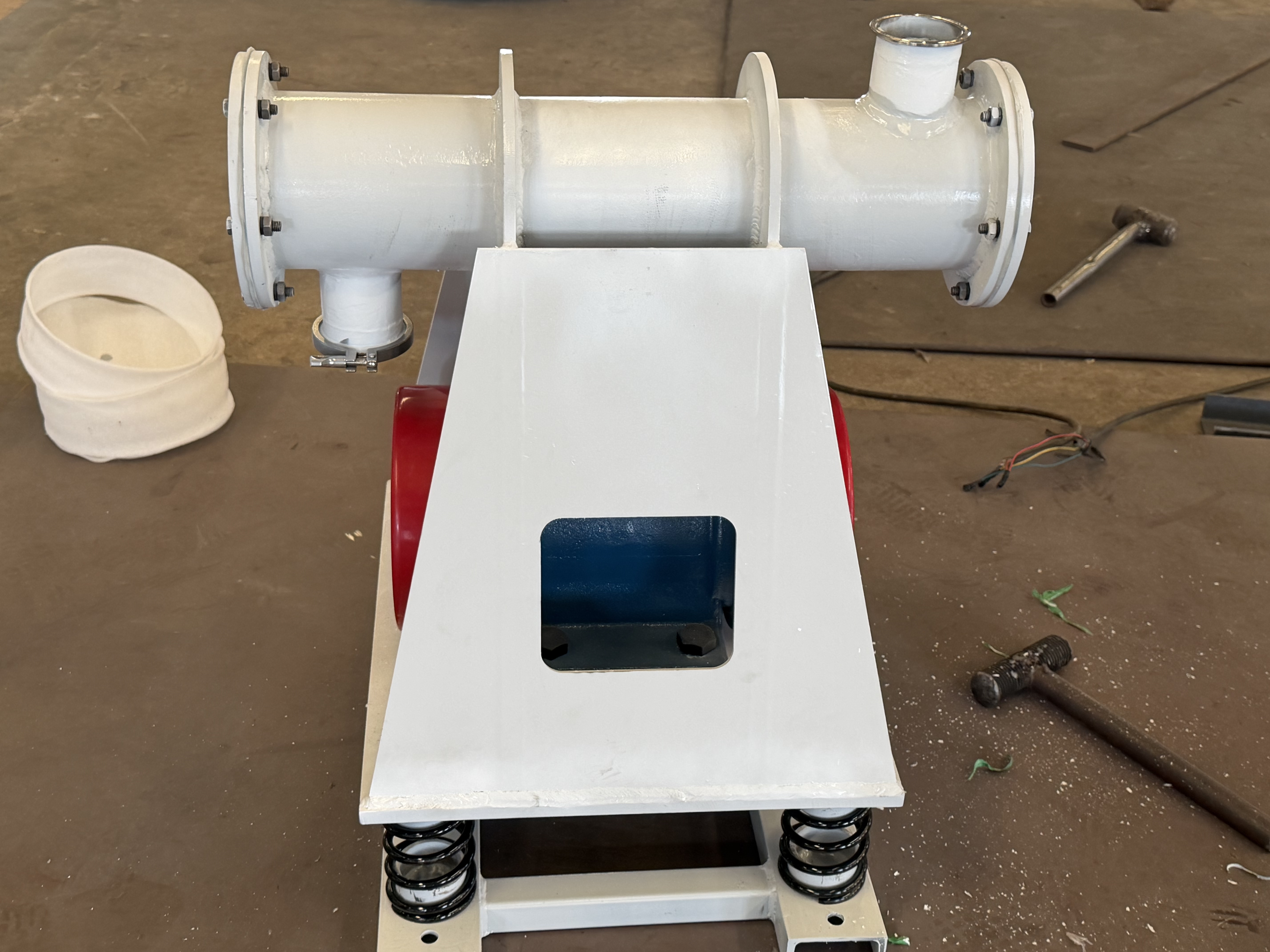
Supporting Structure
The supporting structure holds the grinding chamber and related components in position. Springs are used to support the machine and accommodate vibration during operation.
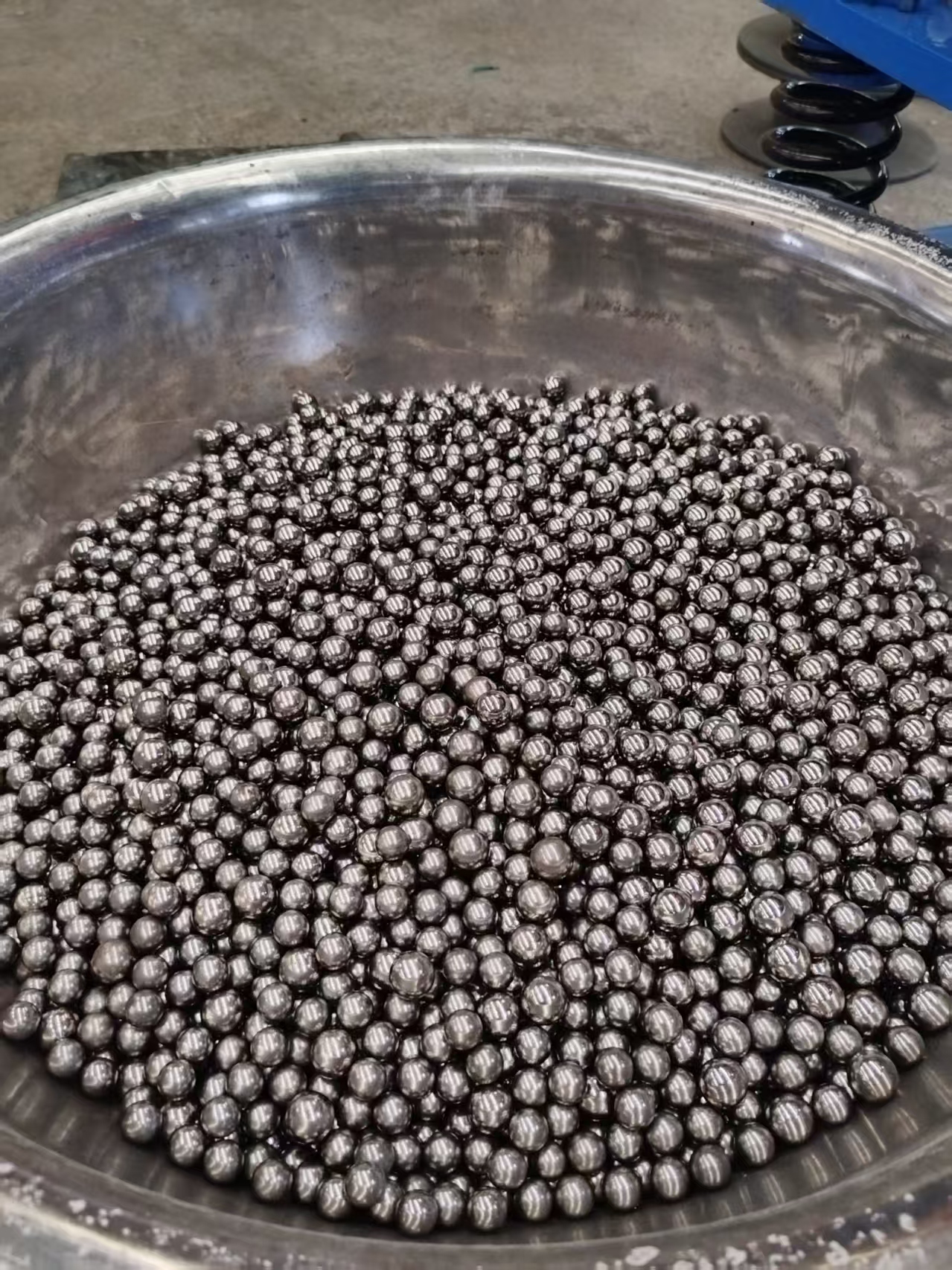
Grinding Media
Grinding media, such as steel balls, help grind the material through repeated impact and friction. The appropriate media should be selected according to the material and the required grinding results.
Working Principle of a Vibrating Mill
A vibrating mill uses vibration and grinding media to grind materials. When the machine starts, the vibration motor makes the grinding chamber vibrate, causing the grinding media inside to move continuously. As they move, the grinding media repeatedly hit and rub against the material, gradually grinding it into smaller particles.
The grinding media can include steel balls or steel rods. The final grinding result depends on the material being processed and the grinding conditions.
Material Feeding Vibration Generation Grinding Grinding Time Material Discharge
Different materials respond differently to grinding. Hardness, toughness,
and initial particle size can affect the grinding process and the final particle size.
The type, size, and quantity of grinding media can influence grinding performance.
Steel balls are used as grinding media in the relevant equipment, with the material
selected according to the machine configuration and application requirements.
Operating conditions can affect the movement of the grinding media and the overall
grinding result. Suitable settings should be determined according to the equipment
configuration and material requirements.
Grinding time affects how long the material is subjected to impact and friction.
The appropriate duration depends on the material and the required grinding result.
The grinding chamber provides space for the material and grinding media.
The lining material should be selected according to the material being
processed and the requirements of the application.
Vibrating mills are used in a wide range of material grinding applications. They can help reduce particle size
and are suitable for different grinding requirements, depending on the material properties and equipment configuration.
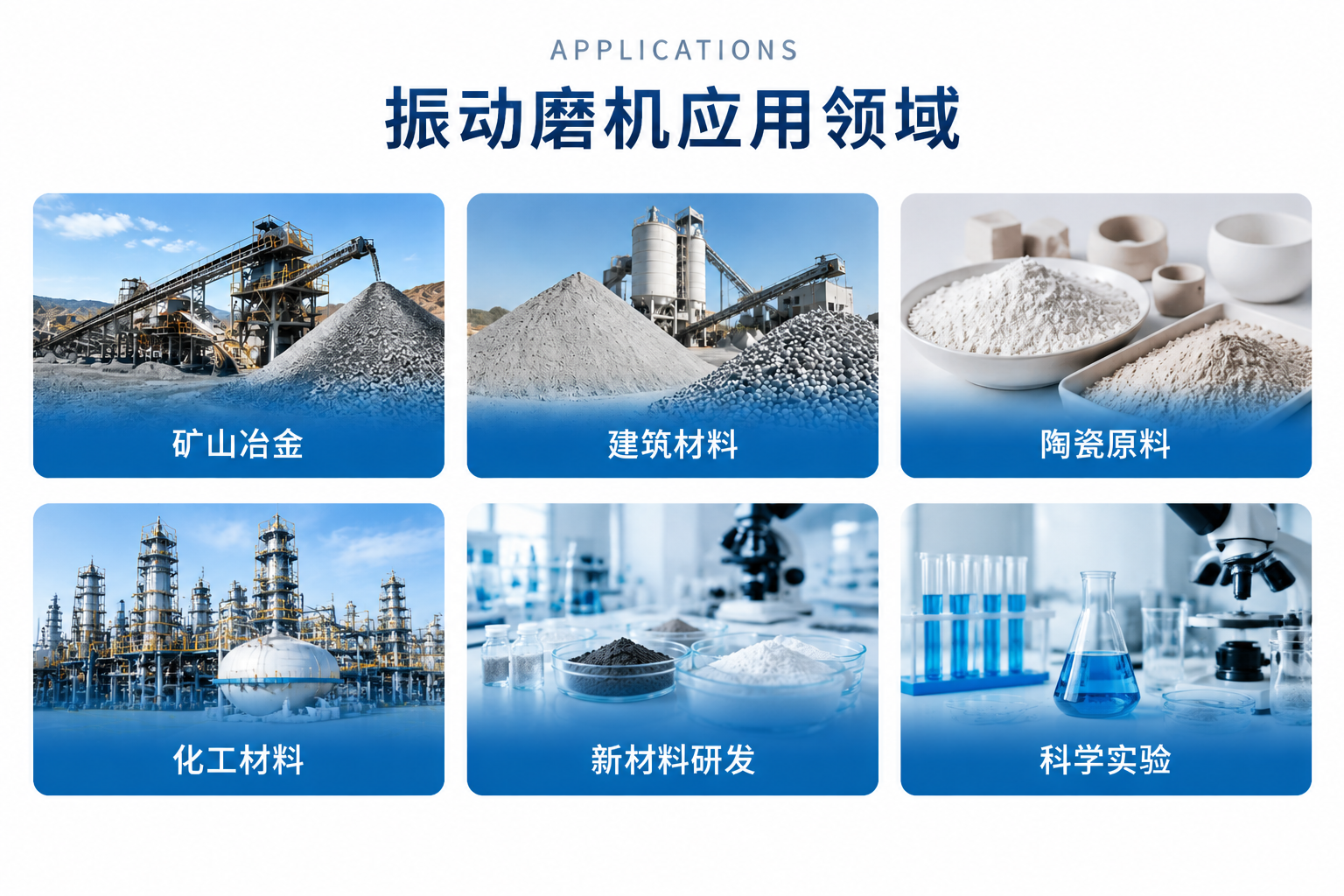
Vibrating mills may be used in industries such as mining and metallurgy, building materials, ceramics, chemicals, new
materials, and scientific research. They can be applied to the grinding of suitable minerals, ceramic raw materials,
chemical raw materials, and other materials that require particle size reduction.
Different industries have different requirements for particle size, material characteristics, and grinding results.
The choice of grinding media, such as steel balls or steel rods, as well as the equipment configuration, should
be determined according to the specific application.
Before selecting a vibrating mill, users should confirm material suitability, required particle size, processing capacity,
and other operating requirements with the equipment manufacturer.
How to Choose a Suitable Vibrating Mill
Choosing a suitable vibrating mill starts with understanding the material and the required grinding result.
The following factors can help determine the appropriate equipment and configuration.
Material Type
Identify the material to be processed and provide information about its properties.
Different materials may require different grinding conditions and equipment configurations.
Initial and Target Particle Size
The initial particle size and the required particle size after grinding are important considerations.
Clearly stating the target fineness helps the manufacturer evaluate the grinding requirements.
Processing Capacity
Consider how much material needs to be processed per batch or within a specific period.
The required capacity helps determine the appropriate machine size and configuration.
Grinding Media
Grinding media can differ in both shape and material. Options may include steel balls and steel rods,
with the material selected according to the properties of the material being ground and the intended
application. The appropriate combination should be confirmed based on the specific grinding requirements.
Grinding Chamber Configuration
Vibrating mills are available in different grinding chamber configurations, including single-cylinder, double-cylinder,
and triple-cylinder designs. The appropriate configuration depends on the equipment model, material, and grinding
requirements. Customers can discuss their processing needs with the manufacturer to determine a suitable design.
Equipment Configuration
The grinding chamber, lining, feeding and discharge arrangements, and other structural details should be considered
according to the application. If the standard configuration does not meet the requirements, discuss possible
customization with the manufacturer.
Material Density
Material density may be relevant for certain applications, but it is not necessarily a required parameter for every vibrating mill.
Whether density information is needed depends on the material and the equipment configuration. The manufacturer can
advise which data should be provided.
To help evaluate a suitable vibrating mill, customers can provide the material name, initial and target particle sizes, required
processing capacity, and intended application. A material sample or photo can also be useful when available.
What is a vibrating mill used for?
A vibrating mill is used to grind suitable materials and reduce their particle size. Its applications vary according to the material properties and equipment configuration.
What grinding media can be used in a vibrating mill?
Grinding media may include steel balls or steel rods. The shape and material of the grinding media should be selected according to the material being processed and the grinding requirements.
Which industries use vibrating mills?
Vibrating mills may be used in mining and metallurgy, building materials, ceramics, chemicals, new materials, and scientific research. Actual suitability depends on the material and the selected equipment.
Can a vibrating mill achieve a specific particle size?
The achievable particle size depends on the material, equipment configuration, and operating conditions. Specific requirements should be discussed with the manufacturer and verified through appropriate testing when necessary.
What information should I provide when requesting a vibrating mill?
It is helpful to provide the material name, initial particle size, target particle size, required processing capacity, and intended application. A material sample or photo can also help the manufacturer evaluate your requirements.

